Human Behaviour
Human Ethology is a field of biological research concerned with the analysis of human behavior from an evolutionary point of view — the application of the principles of evolutionary theory to the study of human behavioral diversity. The design of traits, behaviors, and perceptions are examined as functional products of natural or sexual selection. On this basis, we attempt to explain human behavior as an adaptive solution to ecological and social constraints such as the competing life-history demands of development, mate acquisition, reproduction, parental care.
We are interested in the biological causes of facial shape variation and in the resulting social perception (both in children and adults). For this, we study biological processes such as allometric, androgenic (current, and also prenatal via the study of digit ratio, 2D:4D), and genomic effects on facial morphology and integrate concepts from evolutionary psychology and aesthetics to decompose facial shape patterns in relation to mating system (including non-human primates in a comparative approach), fluctuating asymmetry, perceived attractiveness, sex stereotypes, overgeneralization, etc.
We apply methods for systematic assessment, quantification and experimental manipulation of biological form using the toolkit of geometric morphometrics (and imaging techniques).
Not only can we isolate and plot the shape changes that are determined by proximate "biological causes" (e.g., different hormone exposures in the prenatal environment, upper panel), but also we can now work backward from perception to form (e.g., face overgeneralization to car fronts, lower panel: childlike looking car on the left, "adult" one on the right).
We also study modern human behaviour in the urban environment in the context of evolutionary aesthetics, crowding, and xenophobia, emphasizing direct behavioral observation.
- Katrin Schäfer
- Sonja Windhager
- Bernhard Fink
- 3D Surface Scanner Lab

- studies in guinea pigs, humans
PhDs: Matthias Nemeth, MA; Benjamin Siart, MA; MAs: Daniele Schuster, Arthur Kaplan
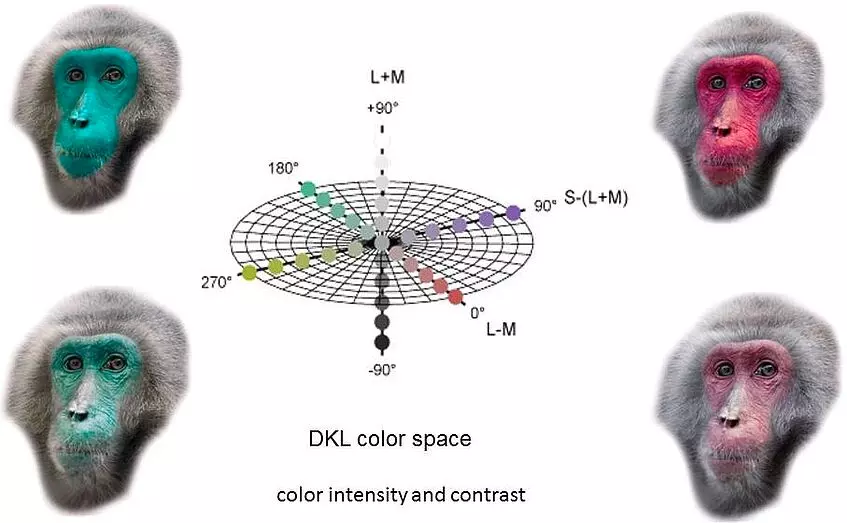
Effects of sexual attractiveness (color, contrast, and morphology) on hypothalamic-pituitary-gonadal axis, hypothalamic-pituitary-andrenal axis, social behavior, social rank - non-human primates, humans
PhD: Lena Pflüger - Organizational behavior
PhD: Johannes Jäschke, Benjamin Siart
evolutionary aspects of human pro-social behavior in the modern working process and its effects on the sex ratio at birth and stress physiology in relation to socioeconomic status - studies in macaque ssp., chimpanzees
PhD: Lena Pflüger
Molecular biological aspects on OXTR (SNP polymorphism), dopaminergic system polymorphism, COMT (molecular biological basics of social hierarchy in primates), mtDNA (molecular biological stress markers - expression rates under different environmental conditions)